

In 2021, a poll revealed that 75% of adults were worried about the impact of climate change.[i] The cohort was also asked to describe how they feel about the future of the environment and a popular response, alongside “concern for their family and future generations” was the “expense of making eco-friendly changes.”
It’s unclear how far positive attitudes and intentions to live a greener way of life translate into purchasing (and other) behaviours. We’re told that small things make a difference but, as the cost-of-living crisis starts to bite, affordability is going to be a key factor in consumers’ decision making.
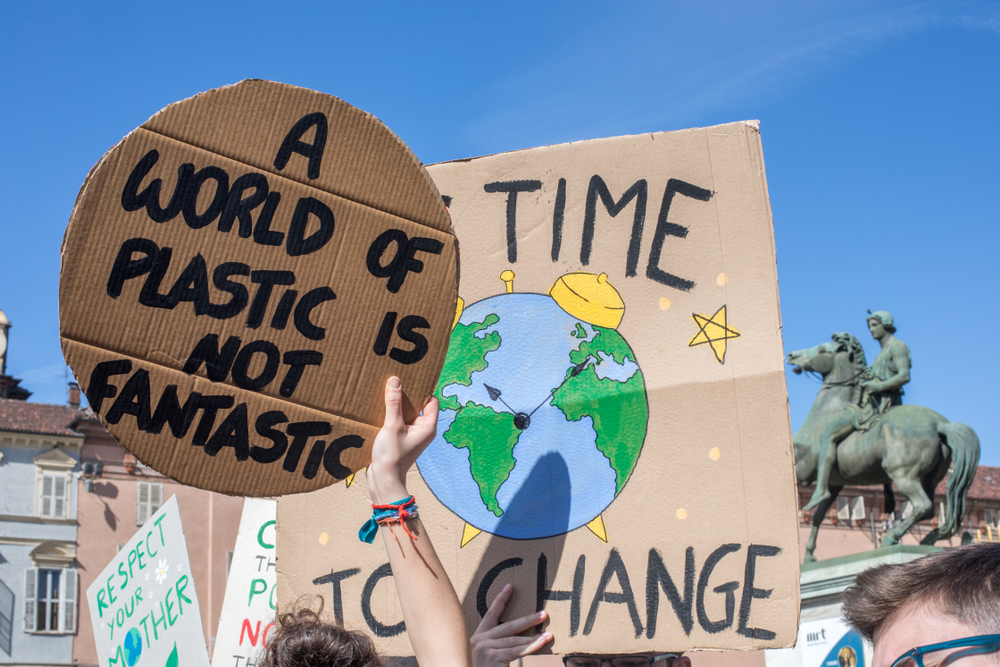
Patients are also consumers – they are able to choose where to go for their dental treatment, and the market for oral hygiene products is vast and ever-growing. Dentistry also has huge problems to solve if it wants to be more sustainable, for example challenges around single-use plastics (SUPs), which are an “essential and invaluable component of modern, safe and effective medical and dental care”.[ii] Cheap and flexible (literally and figuratively), for each treatment it delivers, a practice will get through a high volume of SUPs. A paper published earlier this year, that examined the waste generated in clinical dental practice and hospital settings, found that an average of 21 SUP items were used (354g per procedure).[iii] Nineteen of these items were PPE (an increase from 14, pre-pandemic).
If elimination of plastic waste isn’t possible, there are projects that set out standards for best practice. Operation Clean Sweep (OCS) is a global programme designed to “prevent the loss of plastic granules (pellets, flakes and powders) during handling by the various entities in the plastics value chain and their release into the environment”.[iv] OCS helps companies strengthen their sustainability by committing to actions including employee training.
 In 2018, a study looked at carbon modelling within NHS dentistry, and named travel (for patients and staff) as the most significant contributor to the carbon footprint. Covid-19 accelerated the evolution of dental service design, and lasting changes include more remote consultations. Whereas some of your patients might still be adjusting to speaking to you via a screen, others will appreciate the cost-effectiveness and convenience of not needing to attend the practice in person, in order to have a one-to-one conversation with a dental practitioner.
What other practical options are there, to make dentistry more eco-friendly, in an affordable and accessible way? A previous study had found that procurement was one of the largest contributors to the carbon footprint of NHS dental services, so you could start to source and buy more mindfully.[v] There are manufactures and service providers with stronger green credentials than others, including their company ethics, recycling policies and production methods.
It isn’t just the execution of treatment, either, as patient-consumers are faced with a huge choice of oral hygiene products to buy, in a crowded market. We want to recommend effective, high-quality options, but price-point will be important too. Is there a way to motivate people in prevention and do it in an affordable and eco-friendly way? To maintain a good standard of oral hygiene between appointments and prevent disease, we will instruct our patients in the correct use of a – usually plastic – toothbrush. Even if someone rarely attends the dentist, if at all, they will likely own a toothbrush and replace it once the bristles are worn. Because plastic toothbrushes are not biodegradable and cannot be recycled, billions end up in landfill or improperly discarded in the oceans, often washing up on beaches around the world. We are seeing more brushes on the market that can, in part, be recycled, because they are made with alternative materials to plastic. There are toothbrushes and interdental tools available with wooden handles, for example the Tandex WOODI, an interdental brush with a birchwood handle that is FSC certified, indicating the raw material has been sourced from a well-managed forest and/or recycled source.[vi] Tandex is a Danish-based producer of premium oral-hygiene aids using only green energy in its factories. The products are robust and effective, offering your patients good value, as well as a way to improve their oral health.
And of course, when people receive quality preventive care, they will need to visit the dentist less, saving them time as well as money . Dentistry that is sustainable, that uses fewer resources and is better for the planet will be focused on preventing the risk of disease, by empowering people to take ownership of their health. By looking at the way they operate, including the companies they work with and products they buy and recommend, practices can offer quality dentistry that is greener and good value too.
For more information on Tandex’s range of products,
visit https://tandex.dk/ or visit the Facebook page
Our products are also available from CTS Dental Supplies https://www.cts-dental.com/ and DHB Oral Healthcare https://dhb.co.uk/
Author Kimberley Lloyd- Rees on behalf of Tandex
Kimberley graduated from the University of Sheffield in 2010, where she now works as a clinical tutor in Dental Hygiene and Therapy as well as working in practice. She has spent her career working across a variety of specialist private and mixed dental practices, for the MOD and volunteering her time to a dental charity in Nepal.
[i] Office for National Statistics. Data on public attitudes to the environment and the impact of climate change, Great Britain. 5 November, 2021. Link: https://www.ons.gov.uk/peoplepopulationandcommunity/wellbeing/datasets/dataonpublicattitudestotheenvironmentandtheimpactofclimatechangegreatbritain (accessed April 2022).
[ii] Martin, N., Mulligan, S., Fuzesi, P. et al. (2020) Waste plastics in clinical environments: a multi-disciplinary challenge. In: Creative Circular Economy Approaches to Eliminate Plastics Waste. Plastics Research and Innovation Fund Conference, 08-09 Jun 2020, University of Sheffield. UK Research and Innovation and UK Circular Plastics Network, pp. 86-91.
[iii] Nicolas Martin, Steven Mulligan, Peter Fuzesi, Paul V. Hatton. Quantification of single use plastics waste generated in clinical dental practice and hospital settings, Journal of Dentistry, vol 118, 2022. https://doi.org/10.1016/j.jdent.2022.103948.
[iv] Operation Clean Sweep. Link: http://www.opcleansweep.eu/the-program/
[v] Carbon modelling within dentistry: towards a more sustainable future. PHE/Centre for Sustainable Healthcare, 2018.
[vi] Forest Stewardship Council https://fsc.org/en (accessed April 2022)


