






Though dental professionals are not responsible for diagnosing or treating most cancers around the body, they are integral to early detection of the disease around the mouth, head and neck. With the increase in cancer screenings, cutting-edge technology and growing awareness among both the healthcare sector and general public, cancer survival rates are improving. To continue this positive trend, it’s important that all play their part.
Cancer survival rates have doubled overall
Cancer survival rates have doubled since the 1970s,[i] when just 1 in 4 people lived more than 10 years following their diagnosis. Today, 50% of individuals survive 10 years in England and Wales, with ambitions to drive this trend further so that more and more people live long beyond their diagnosis.
According to the latest statistics from Cancer Research UK,[ii] there are more than 385,000 new cases each year. Men are slightly more likely to receive a diagnosis (199,000) compared to women (186,000), with breast, prostate, lung and bowel cancers accounting for more than half of all reported. Survival is not equal among all cancers and ranges from 1% for pancreatic cancer right up to 98% for testicular cancer.
With regards to mouth and oropharyngeal cancers, early detection remains key. When identified in stage 1, the 5-year survival rate is 85% for mouth cancer. Those diagnosed in stage 2 have a 70% survival rate at 5 years, and stage 3 is linked to a 55% 5-year survival rate. Detection of stage 4 mouth cancer is associated with a 35% survival rate of 5 years or more. Similar rates are reported for oropharyngeal cancers, ranging from 75% for stage 1 and 64% for stage 4.[iii]
Treatment progression
The therapies available to treat various different cancers have come a long way in the past few decades. Key milestones have included the introduction of radical mastectomy for breast cancer, x-ray diagnostic imaging, radiotherapy, screening for cervical cancer, hormone therapy for prostate cancer, and combination chemotherapy, as well as several surgical interventions.[iv] Many have directly impacted the treatment of oral cancer, transforming outcomes with surgery, radiotherapy, chemotherapy, targeted therapy and immunotherapy for enhanced quality of life and improved outcomes for patients.[v]
To further drive survival rates up, this research and development must continue. Over the past year, a new three-drug therapy has been developed to double the amount of time taken for aggressive advanced breast cancer to progress.[vi] There are similar hopes for new drugs within the field of prostate and ovarian cancers,[vii] and advanced melanomas.[viii]
Moving forward, Artificial Intelligence (AI) is expected to have a significant impact on the advancement of cancer therapies. It is predicted to facilitate early diagnosis and rapid yet highly tailored treatment delivery. This, accompanied by new and further refined drug combinations, is likely to help drive survival rates higher than ever.[ix] Next-generation sequencing is another emerging technology that shows promise for the complete revolution of oncology in the years to come.[x]
Awareness and prevention
Despite heavy investment into management and treatment techniques, the priority remains prevention. Many cancers share several of the same or very similar risk factors, meaning that individuals can lower their chances of developing the disease by implementing a number of fairly simple steps.
The Cancer Awareness Measure ‘Plus’ is designed to assess public attitudes, understanding and behaviours with regards to diagnosis, screening and prevention of cancer. Findings from the 2024 report[xi] suggest that almost all participants recognised the main preventable risk factors of cancer development.
For mouth cancer more specifically, public awareness of the risk factors and symptoms seems to be lower.[xii] This emphasises the importance of patient education in the area, encouraging more individuals to appreciate the risks involved and to be proactive in reducing the likelihood of developing mouth cancer.
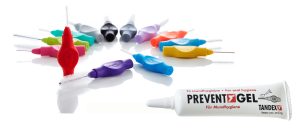
As behaviour change can take time, it is necessary to start with small and easily-implementable steps. For many, the easiest yet greatest change they can make to enhance their at-home oral hygiene routine is to introduce interdental cleaning. TANDEX provides a range of FLEXI interdental brushes that are perfectly complemented by the PREVENT Gel to ensure exceptional daily oral cleaning and protect against an array of dental diseases. A thorough oral health regime that incorporates trusted products will help patients to optimise plaque removal and lower their risk of developing many dental diseases, including mouth cancer.
The statistics show positive trends in the survival rates for a number of different cancers. To help these continue in an upwards trajectory, it is crucial that treatment solutions are further developed and that public awareness continues to be improved.
For more information on Tandex’s range of products,
visit https://tandex.dk/
Our products are also available from DHB Oral Healthcare https://dhb.co.uk/
 Author: Jacob Watwood – Associate dentist at Fieldside Dental Practice
[i] Cancer Research UK. Cancer statistics. https://www.cancerresearchuk.org/health-professional/cancer-statistics/survival [Accessed July 2025]
[ii] Cancer Research UK. Cancer statistics for the UK. https://www.cancerresearchuk.org/health-professional/cancer-statistics-for-the-uk [Accessed July 2025]
[iii] Cancer Research UK. Survival for mouth and oropharyngeal cancer. https://www.cancerresearchuk.org/about-cancer/mouth-cancer/survival [Accessed July 2025]
[iv] National Cancer Institute. Milestones in cancer research and discovery. https://www.cancer.gov/research/progress/250-years-milestones [Accessed July 2025]
[v] Ramachandran, Surekha. (2024). Oral Cancer: Recent Breakthroughs in Pathology and Therapeutic Approaches. Oral Oncology Reports. 12. 100678. 10.1016/j.oor.2024.100678.
[vi] The Institute of Cancer Research. Powerful new therapy doubles progression-free survival in advanced breast cancer. October 2024. https://www.icr.ac.uk/about-us/icr-news/detail/powerful-new-therapy-doubles-progression-free-survival-in-advanced-breast-cancer [Accessed July 2025]
[vii] Prostate Cancer UK. new drug could treat prostate cancer that stops responding to hormone therapy. January 2025. https://prostatecanceruk.org/about-us/news-and-views/2025/01/new-drug-could-treat-prostate-cancer-that-stops-responding-to-hormone-therapy [Accessed July 2025]
[viii] The Institute of Cancer Research. ASCO 2025: one-time cell therapy offers long-term survival hope for patients with advanced melanoma. June 2025. https://www.icr.ac.uk/about-us/icr-news/detail/asco-2025–one-time-cell-therapy-offers-long-term-survival-hope-for-patients-with-advanced-melanoma [Accessed July 2025]
[ix] Liu, B., Zhou, H., Tan, L. et al. Exploring treatment options in cancer: tumor treatment strategies. Sig Transduct Target Ther 9, 175 (2024). https://doi.org/10.1038/s41392-024-01856-7
[x] Ghoreyshi N, Heidari R, Farhadi A, Chamanara M, Farahani N, Vahidi M, Behroozi J. Next-generation sequencing in cancer diagnosis and treatment: clinical applications and future directions. Discov Oncol. 2025 Apr 20;16(1):578. doi: 10.1007/s12672-025-01816-9. PMID: 40253661; PMCID: PMC12009796.
[xi] Cancer Research UK. Cancer Awareness measure ‘Plus’ (CAM+). Survey conducted November 2024. Download from https://www.cancerresearchuk.org/health-professional/awareness-and-prevention/the-cancer-awareness-measures-cam-plus [Accessed July 2025]
[xii] Barrett, D., Dubal, R. & L. Morgan, C. The UK public and healthcare professionals’ awareness of mouth cancer. Br Dent J 235, 811–815 (2023). https://doi.org/10.1038/s41415-023-6490-5


