






Generally, toothpastes are considered to be a cosmetic product, with their purpose to clean the teeth only. However, a small number are considered to be medical devices – offering sensitivity or enamel protection, for example. In order to make these claims, these toothpastes undergo rigorous regulatory processes – Medical Device Regulation (MDR) – to prove that they are backed by scientific evidence.[i]
Clinicians should be aware of the significance of MDR, and what it means for the toothpaste they recommend to their patients. This may influence their decision making when it comes to selecting a product of the highest possible standard.
What is a medical device?
According to the Medicines & Healthcare products Regulatory Agency (MHRA), a medical device is any product which claims to treat or prevent disease.[ii] As mentioned, toothpaste can fall into either the cosmetic or medical device category, depending on its intended results. Toothpastes which are intended to be used to relieve dentinal hypersensitivity could be classified as a medical device. Further to this, whilst enamel remineralisation and demineralisation is a natural cycle, with a fluoridated toothpaste contributing to maintaining a healthy balance, products which claim to remineralise the enamel imply a medical function.[iii] However, if a toothpaste is designed to be used purely to clean the teeth, freshen the breath, and maintain good oral hygiene, it is considered cosmetic.ii
Here are the symbols that tell you what to look out for:
The MD logo means that a product is a registered medical device and the CE 0050 logo refers to a notified body number associated with CE marking, which indicates that a product complies with European safety, health and environmental requirements.
It is important to recognise that even though toothpastes are usually ‘cosmetic’ they still have a clear role in keeping the teeth and gums in good condition, and protecting against cavities and gingivitis – claims relating to this, therefore, are in line with the cosmetic definition and have benefit for public health awareness. Further to this, whilst enamel remineralisation and demineralisation is a natural cycle, with a fluoridated toothpaste contributing to maintaining a healthy balance, products which claim to remineralise the enamel imply a medical function.[iv]
What does medical device regulation involve?
The medical device approval process in the UK is complex and thorough, ensuring optimal patient safety and device efficacy. There are a number of steps that must be followed to ensure that a medical device meets high standards of quality and safety. These steps include:
Classification and intended use definition
Precisely defining the intended medical purpose – prevention of caries or reduction of dentine hypersensitivity, for example – and determining the correct risk class under MDR (usually class IIa for therapeutic toothpastes). This classification dictates the level of oversight and the type of conformity assessment required.
Clinical evaluation and evidence dossier
A clinical evaluation report is compiled which includes a systematic review of the available literature, clinical investigation data, and a benefit-risk analysis. This must demonstrate the clinical performance of the toothpaste.
Risk management and biological safety
A full ISO 14971 risk management (formulation, biocompatibility, potential adverse effects, and mitigation strategies) is performed, a toxicological risk assessment is conducted for all ingredients and finished product, and proof of compliance with ISO 10993 safety requirements (cytotoxicity, irritation, and sensitisation) is provided.
Technical documentation
A detailed technical document is created which includes the product’s formulation and manufacturing process, quality control specifications, stability and shelf-life data, packaging and labelling information, and a post-market surveillance plan.
Notified body review and conformity assessment
The entire technical document is then submitted for independent assessment. Here it will undergo a rigorous review, which involves requests for additional data or clarifications, facility inspections and audits, or verification that the quality management system (ISO 13485) is in place and effective.
Declaration of conformity and CE marking
Once this stage is approved, an EU declaration of conformity is issued and the CE mark is affixed to packaging. This signals that the toothpaste is compliant with MDR and legally allowed on the market.
Ongoing post-market surveillance and vigilance
This process does not end here, ongoing surveillance is essential to ensure compliance with these high standards. This involves collecting and analysing data on product performance in the market, preparing periodic safety update reports, and undergoing regular audits and re-certification to maintain MDR status.[v]
It is important to note that more recent changes mean that medical devices in the UK are now able to apply through a UK Approved Body, to receive a UKCA marking for a medical device.[vi]
What does this mean for patients?
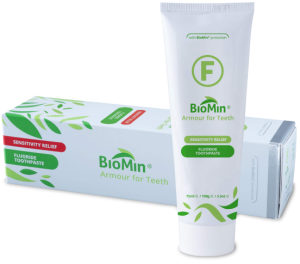 At BioMin®, we believe your patients deserve science you can trust. That’s why we have chosen to classify BioMin® as a medical device under MDR, the most rigorous standard in Europe for products that impact your health. Due to the comprehensive nature of testing, only a handful of toothpastes in the UK go through medical regulation. BioMin® does, because we are committed to giving you more than a quick fix. We deliver real results, verified by science, and trusted by dental professionals worldwide. Your patience while we complete our latest MDR update helps us keep that promise. Next time you order BioMin®, you can be sure you’re recommending one of the most thoroughly validated sensitivity toothpastes available. With BioMin®, you can confidently say: “This works — and I know why.”
It is beneficial for clinicians to understand what sets certain toothpastes apart from each other, in order to provide the best recommendations to patients depending on their unique needs. Recommending toothpastes which comply with MDR means that patients can consistently use a product which has been independently verified and clinically-proven to provide high-quality outcomes.

The science is clear. The solution is simple.
www.biomin.co.uk
Back in Stock Soon!
We are currently experiencing a temporary disruption in supply across many of our usual stockists due to regulatory processes. While this is a temporary pause, it’s a part of ensuring we meet the highest standards and continue to provide safe and trusted products to our customers.
We’re working hard behind the scenes to resolve this and will be sharing updates on our website as soon as we have a clearer timeline.
Your patience and continued support is truly appreciated.
[i] ASA. Dental: Toothpaste. Accessed Sept 25: https://www.asa.org.uk/advice-online/toothpaste-general.html#:~:text=In%20general%2C%20toothpastes%20are%20considered,%2C%20see%20Dental:%20Sensitive%20Teeth.
[ii] MHRA. A guide to what is a medicinal product. March 2020. Accessed Sept 25: https://assets.publishing.service.gov.uk/government/uploads/system/uploads/attachment_data/file/872742/GN8_FINAL_10_03_2020__combined_.pdf
[iii] CTPA. Guide on Common Understanding of Borderline Toothpaste Claims. Accessed Sept 25: https://www.ctpa.org.uk/news/new-ctpa-guide-on-common-understanding-of-borderline-toothpaste-claims-4093
[v] ADERICO. How are UK medical devices approved? Accessed Sept 25: https://www.adericomedical.com/post/how-are-medical-devices-approved-in-the-uk
[vi] UK Gov. Med Tech Regulatory Reform: The first steps towards a new framework for medical devices in the UK. Accessed Sept 25: https://medregs.blog.gov.uk/2024/02/13/med-tech-regulatory-reform-the-first-steps-towards-a-new-framework-for-medical-devices-in-the-uk/


