



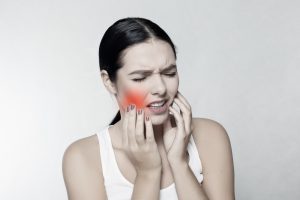
Pain throughout the gingival tissue is a common symptom of periodontal disease, often accompanied by bleeding during eating or oral hygiene routines, and as well as inflammation.[i] This discomfort can significantly impact daily life, with patients changing dietary choices or avoiding thorough interdental cleaning due to the soreness it induces.
The latter element can be particularly concerning. Pain throughout the periodontal tissue can be brought on by additional factors such as heavily abrasive brushing – a problem faced by even the most well-intentioned patient. However, avoidance of these effective oral hygiene practices can give way to an increased risk of infection and oral disease, exacerbating the very causes of gingival pain.
Clinicians should be prepared to recognise the causes of gingival sensitivity in any presenting patients. It’s also important to understand how it affects their day-to-day life, and professionals should be able to recommend immediate implementable changes that can improve periodontal health over time.
Behind the pain
Traditional oral hygiene routines can cause trauma to the soft tissue, creating gingival abrasions that can cause pain and encourage recession of the tissue. The literature reports that a medium-hard toothbrush is twice as likely to cause tissue damage as a soft toothbrush.[ii] In the same vein, a medium toothbrush can remove more damaging biofilm than soft toothbrushes.[iii] To minimise harm whilst maximising the ability to remove plaque and biofilm, patients need to use adopt a more careful technique; gentle, circular brushing that focuses on each tooth surface, and takes care around the gingival margin is key. Proper interdental cleaning should support this, with a variety of solutions available, such as traditional floss or oral irrigators.
Infections linked to periodontal pain are manifold. The most prominent link is periodontal disease; almost a fifth (19%) of adults in the UK have been told they have gum disease.[iv] Gingivitis will typically present with inflammation and bleeding upon brushing or flossing, as well as dull pain, but progression to periodontitis may create a tender feeling simply upon being touched, which can be troubling for many patients.[v], [vi] As oral hygiene routines improve, and plaque and bacteria is kept away from the gingival margin, patients can expect inflammation to subside over time, and discomfort to fade with it.
Discomfort can also be the result of gingival and periodontal abscesses, necrotising periodontal diseases, injuries related to traumas such as piercings, gingival recession, and more.vi Gingival recession is likely the most prevalent condition of these, and can be caused by aggressive brushing, poor oral hygiene and frequent tobacco use. The reduced width of keratinised connective tissue can once again cause inflammation, which may also increase dentine hypersensitivity.vi
Changing behaviour
Sensitivity and pain throughout the periodontal tissue can place a significant strain on everyday life. Patients may find certain foods being uncomfortable to eat or meals being interrupted entirely.[vii] If a patient avoids certain types of food because of this, they could encounter various issues. Harder fruits and vegetables, such as apples and carrots, often contain vital nutrients, and replacing these with unhealthy alternatives can be detrimental.
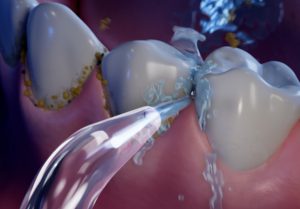 Inadequate oral hygiene routines and, in particular, interdental cleaning approaches, can be extremely detrimental to gingival health, with evidence of abrasion and physical injury in some cases.[viii] Whilst patients may be motivated to look after their oral health, and take on new routines such as conventional flossing as a result, the pain caused by this may lead to them ceasing such a behaviour. The benefits of flossing outweigh the risk of damage,viii but an interdental cleaning alternative that reduces any aggravation of pain would be ideal.
Clean with comfort
Conventional flossing is technique sensitive, and so alternative interdental cleaning solutions may be helpful in order to improve oral hygiene whilst managing pain.[ix] Patients rely on their dental professionals to provide effective recommendations.ix An oral irrigator could be an ideal solution for individuals with gingival pain, with studies showing a statistically significant reduction in bleeding on probing in just four weeks.ix
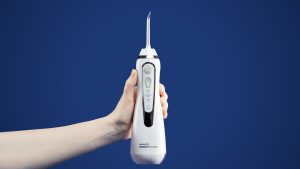 A solution such as the Cordless Advanced water flosser from Waterpik™ can aid patients with up to 99.9% of plaque and bacteria removed with just a three second application,[x] reaching below the gingival margin and in the interdental spaces, where brushing alone cannot access. Patients with sensitive gums can choose between three pressure settings, for an effective clean without compromising on comfort.
Waterpik™ is the #1 water flosser brand recommended by dental professionals,[xi] and is the only water flosser brand to be approved by the Oral Health Foundation – ensure you recommend by name.
Pain and discomfort throughout the gingival tissue can be caused by a number of issues, but ensuring gentle and effective oral hygiene routines are in place will minimise risk in a number of ways. This can help patients return to smiling and living in comfort, every day.

For more information on WaterpikTM water flosser products visit www.waterpik.co.uk. WaterpikTM products are available from Amazon, Costco UK, Argos, Boots and Tesco online and in stores across the UK and Ireland.
 Author: Rachel Bennett – dental hygienist at Bupa Dental Care Leeds and Churchview Dental Care
[i] NHS, (2022). Gum Disease. (Online) Available at: https://www.nhs.uk/conditions/gum-disease/ [Accessed November 2025]
[ii] Hennequin‐Hoenderdos, N. L., Slot, D. E., Van der Sluijs, E., Adam, R., Grender, J. M., & Van der Weijden, G. A. (2017). The effects of different levels of brush end rounding on gingival abrasion: a double‐blind randomized clinical trial. International Journal of Dental Hygiene, 15(4), 335-344.
[iii] Zanatta, F. B., Bergoli, A. D., Werle, S. B., & Antoniazzi, R. P. (2011). Biofilm removal and gingival abrasion with medium and soft toothbrushes. Oral Health Prev Dent, 9(2), 177-83.
[iv] Office for Health Improvement & Disparities, (2024). Adult oral health survey 2021: self-reported health of teeth and gums. (Online) Available at: https://www.gov.uk/government/statistics/adult-oral-health-survey-2021/adult-oral-health-survey-2021-self-reported-health-of-teeth-and-gums [Accessed November 2025]
[v] Jonesn, G., Wilson, H., Smith, S., & Brown, T. (2023). Periodontitis: Causes, symptoms, and steps to treatment. Fusion of Multidisciplinary Research, An International Journal, 4(2), 445-457.
[vi] Miranda-Rius, J., Brunet-Llobet, L., & Lahor-Soler, E. (2018). The Periodontium as a Potential Cause of Orofacial Pain:: A Comprehensive Review. The Open Dentistry Journal, 12, 520.
[vii] Ng, S. K., & Leung, W. K. (2006). Oral health‐related quality of life and periodontal status. Community dentistry and oral epidemiology, 34(2), 114-122.
[viii] Salas, M. L., McClellan, A. C., MacNeill, S. R., Satheesh, K. M., & Cobb, C. M. (2012). Interproximal cervical lesions caused by incorrect flossing technique. International journal of dental hygiene, 10(2), 83-85.
[ix] Mancinelli‐Lyle, D., Qaqish, J. G., Goyal, C. R., & Schuller, R. (2023). Efficacy of water flossing on clinical parameters of inflammation and plaque: a 4‐week randomized controlled trial. International Journal of Dental Hygiene, 21(4), 659-668.
[x] Gorur, A., Lyle, D. M., Schaudinn, C., & Costerton, J. W. (2009). Biofilm removal with a dental water jet. Compendium of continuing education in dentistry (Jamesburg, NJ: 1995), 30, 1-6.
[xi] Based on 2025 independent survey of Dental Professionals; among those who recommended branded water flossers


