




Orthodontic treatment is absolutely lifechanging for many patients, with its ability to significantly enhance confidence. However, the process itself alters much more than a patient’s appearance, but comes with changes that reshape their daily routine immensely – it presents unique challenges that impact patients’ daily lives.
Brackets and wires necessitate a learning curve when navigating how to effectively clean around these plaque-trapping appliances – something that regular toothbrushing simply cannot achieve. As a dental professional, helping patients to understand the changes they are to experience from day one, as well as the best ways to support their oral health for the duration of their orthodontic treatment, is vital.
The challenges of fixed appliances
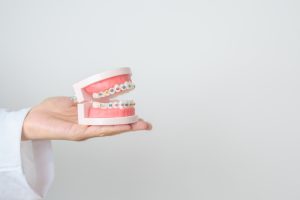
Fixed braces create intricacies where debris can harbour, and bacteria can flourish. Wires create a “blind spot” where regular toothbrush bristles struggle to achieve a thorough clean. Even the most inclusive level of toothbrushing is simply not enough to fulfil an adequate level of cleaning for patients with orthodontic appliances.
These complications encompass the entirety of the oral cavity, including along the gingival margin, eventually developing into inflammation and swelling. As a result, patients might feel pain – often causing them to avoid cleaning entirely. Frequently unbeknown to the patient, the complications escalate further, as biofilm builds up and matures, risking demineralisation and compromising treatment outcomes when white spot lesions appear. Though these changes are preventable, they require an adapted level of care which is only possible with the initial and ongoing support of dental professionals.
The evolution of technique
Many patients wrongfully assume that in order to compensate for the complex surfaces of braces, they must brush harder – however this poses greater harm than good. Brushing harder does not clean the hard-to-reach areas, and in fact causes irritation to sensitive tissues, which exacerbates both pain and risks.
Instead, patients require accuracy over force, using tools designed for precision and an effective clean that are appropriate for the intricacies of orthodontic appliances. Interdental brushes can access otherwise inaccessible areas, and ortho-specific brush heads are designed to clean around complex structures without catching on or damaging the appliance itself. Once patients learn the correct cleaning protocols, and how to efficiently introduce them to their oral hygiene routines, the process and treatment becomes manageable, and they can carry out effective oral hygiene independently.
Supporting discomfort and uncertainty
Emotional change comes with adjustment, just as much as physical. Patients frequently feel unsure about navigating oral hygiene with the new addition in their mouth – worried about breaking wires or loosening brackets. This adds to the inadequacy of cleaning too, as their anxiety of breakage outweighs their determination to clean properly. Particularly in the introductory phase of their treatment, their hesitancy can have a big impact on treatment results.
By encouraging patients to build up their routine gently, clinicians can have an incredibly positive effect on the future of a patient’s independent care. Demonstrative teaching is remarkably useful – actively instructing them on the correct angles of interdental cleaning without causing discomfort, or advising on the gentle directional motions of brushing the gingival margin can be greatly beneficial.
Another excellent recommendation is the use of brace wax to reduce the discomfort caused by brackets and wires rubbing against the cheeks, gingiva, and lips. By recommending the right products, patients can safely avoid this, progressing comfortably through their orthodontic experience.
The best tools for the job
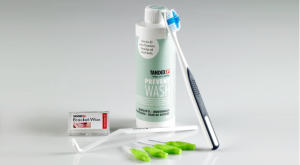
For practices seeking a solution to offer patients as they embark on their orthodontic journey, look no further than the Orthodontic care kit from TANDEX. The set includes an ADVANCE MEDIUM toothbrush to ensure all surfaces are cleaned, the SOLO MEDIUM single bundle brush for the hardest-to-reach areas, four FLEXI interdental brushes to remove interdental plaque, and bracket wax to prevent sore areas. TANDEX supports patients throughout their entire orthodontic treatment – the comprehensive kit offers a solution to each inhibition or challenge faced throughout.
Establishing better long-term habits
Braces offer a unique confidence enhancer that nothing else compares to. However, the changes in smile structure come with the cost of adapting routines to ensure that smiles are both aligned and clean. Patients who are taught to clean professionally by their trusted dental professionals will reap the rewards long-term, making it critical that it is done right.
Beyond toothbrushing, the intricacies of orthodontic appliances demand much greater depth to oral hygiene routines. The right guidance – through physical demonstration, recommendations on the best tools for the job, and dependable support guarantees patients the opportunity to maintain excellent oral health through a journey they have never experienced before.
Learn about how you can support your orthodontic patients, contact the TANDEX team today!

For more information on Tandex’s range of products, visit https://tandex.dk/
Our products are also available from DHB Oral Healthcare https://dhb.co.uk/
 Author: Jacob Watwood – Rodericks Dental Partners – Associate dentist at Fieldside Dental Practice


