




Every year, around 200,000 young Brits undergo NHS-funded orthodontic treatment.[i] Many adults will also choose private treatments to align their smiles. This illustrates how prevalent malocclusion, be it crowded or misaligned teeth, is among modern populations.

The World Health Organization considers malocclusion a significant public health problem because of how it affects tooth function, aesthetics, social lives and self-esteem.[ii] As such, understanding the aetiology and oral health impact of malocclusion is vital, allowing dental practitioners to better educate affected patients on how to manage any crowding or misalignment they may have.
A jaw-dropping change
There are two competing explanations for the modern prevalence of malocclusions: evolution and diet. However, they are not mutually exclusive, with research for both highlighting how indefinite both are as explanations.
Investigating malocclusion through the lens of evolution illuminates several differences between humans now and our hunter-gatherer ancestors. Studying their fossilised skulls showed that malocclusions existed tens of thousands of years ago, but not to the extent, in frequency and severity, as more recent times.[iii] This is due to changes in the human skull: hunter-gatherers had large, powerful jaws that helped them to chew tough meats, nuts and raw vegetables. The same has also been noted in more recent times among indigenous communities who follow more traditional diets: an Australian orthodontist in the 1920s observed that Aboriginal people had more worn-down teeth than Europeans but had perfect dental arches, with fully erupted and functioning wisdom teeth. This contrasts with the UK today, where wisdom tooth removal is one of the most frequent treatments – King’s College London reported up to half a million NHS extractions a year.[iv]
The turning point came with the transition to agriculture 12,000 years ago; a change that saw humans begin to eat softer foods that were more processed and required less mastication. In response, the mandibles began to shrink over time, leading to more teeth than could fit in a perfect arch.[v]
Thoughts to chew on
Some researchers dispute agriculture and evolution as the cause for why we have so many problems with our teeth. One reasoning is that there are stark differences between modern skulls and those from 150 years ago – too short a time for genetics to shift the mandibles over several generations.[vi] As such, the shrinking of the jaw and the subsequent prevalence of crowded and misaligned teeth can be attributed to lifestyle, particularly among babies.
Bones develop and change under the influence of gentle but persistent pressure.[vii] For babies whose bodies are growing, a diet of liquids and soft foods demands little mastication, meaning that the jawbone does not develop to the extent it needs for better tooth alignment in the future. A study on two groups of children found that those with a diet mainly consisting of liquids had smaller gaps between their lower teeth than those who mainly had a solid diet, with the gaps later filled by adult teeth.[viii]
As more forceful chewing stimulates the growth of the jawbone, a diet with lots of soft, foods can lead to smaller mandibles. In particular, the alarming number of soft ultra-processed foods (UPFs) don’t just inhibit jaw growth, but increase the risk of oral disease.[ix] Parents should be encouraged to reduce soft UPF consumption in their children’s diets and increase the number of harder foods, as well as giving babies less mushy food as they transition to solids – get them chewing as early and safely as possible to lower the risk of a malocclusion in the future. However, simply eating may not be enough to change pre-existing genetic traits in regards to jaw size.[x]
Comprehensive cleaning required
Whether a child or an adult, crowded arches and tooth misalignment is an obstacle for the daily oral hygiene routine – overlapping teeth make it harder to thoroughly clean all the tooth surfaces, with food particles able to become trapped in almost inaccessible places. This increases the risk of developing cavities and gingival diseases and must therefore be prevented.[xi]
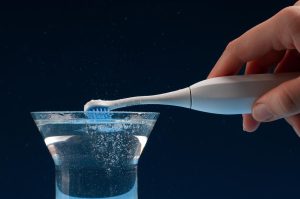
Excellent oral hygiene standards can be achieved with the Hydrosonic Pro toothbrush from Curaprox. Engineered for a comfortable yet effective cleaning experience, it offers seven different cleaning levels and three innovative brush heads, allowing patients to customise their preferred setting. Its innovative sonic technology gentle creates pulses that move water and saliva around the teeth to help dislodge trapped food particles – a great asset for those with crowded smiles.
Regardless of whether the human jaw has changed through evolution or diet, malocclusion can have a long-lasting impact on oral health if untreated. By educating patients on the importance of mastication at a young age and providing the best oral hygiene solutions to manage malocclusion, dental practitioners can help ensure a gold-standard in oral health.

To arrange a Practice Educational Meeting with your Curaden Development Manager please email us on sales@curaden.co.uk
For more information, please visit www.curaprox.co.uk and www.curaden.co.uk
 Andrew Turner – Curaden UK Head of Marketing UK & Ireland
[i] Morley, N. (2024). Claims about Orthodontics. [online] British Orthodontic Society (BOS). Available at: https://bos.org.uk/news/claims-about-orthodontics/.
[ii] Baskaradoss, J.K., Geevarghese, A., Alsaadi, W., Alemam, H., Alghaihab, A., Almutairi, A.S. and Almthen, A. (2022). The impact of malocclusion on the oral health related quality of life of 11–14-year-old children. BMC Pediatrics, 22(1). doi:https://doi.org/10.1186/s12887-022-03127-2.
[iii] Worthington, L. (2025). Humans used to have straighter teeth—what changed? [online] Health. Available at: https://www.nationalgeographic.com/health/article/crooked-teeth-human-evolution-jaw-size.
[iv] ezteether.com. (n.d.). Wisdom Tooth Facts and Statistics – EZ Teether. [online] Available at: https://ezteether.com/blog/wisdom-tooth-facts-statistics/.
[v] Worthington, L. (2025). Humans used to have straighter teeth—what changed? [online] Health. Available at: https://www.nationalgeographic.com/health/article/crooked-teeth-human-evolution-jaw-size.
[vi] Kahn, S., Ehrlich, P., Feldman, M., Sapolsky, R. and Wong, S. (2020). The Jaw Epidemic: Recognition, Origins, Cures, and Prevention. BioScience, [online] 70(9), pp.759–771. doi:https://doi.org/10.1093/biosci/biaa073.
[vii] Hadhazy, A. (2020). A hidden epidemic of shrinking jaws is behind many orthodontic and health issues, Stanford researchers say | Stanford Report. [online] news.stanford.edu. Available at: https://news.stanford.edu/stories/2020/07/toll-shrinking-jaws-human-health.
[viii] Davis, N. (2025). Are ultra-processed foods changing the shape of our jaws? [online] the Guardian. Available at: https://www.theguardian.com/society/2025/jan/14/are-ultra-processed-foods-changing-the-shape-of-our-jaws.
[ix] Cassiano, L.S., Peres, M.A., Motta, J.V.S., Demarco, F.F., Horta, B.L., Ribeiro, C.C. and Nascimento, G.G. (2022). Periodontitis Is Associated with Consumption of Processed and Ultra-Processed Foods: Findings from a Population-Based Study. Nutrients, 14(18), p.3735. doi:https://doi.org/10.3390/nu14183735.
[x] Davis, N. (2025). Are ultra-processed foods changing the shape of our jaws? [online] the Guardian. Available at: https://www.theguardian.com/society/2025/jan/14/are-ultra-processed-foods-changing-the-shape-of-our-jaws.
[xi] Colgate. (2024). Crooked Teeth? Here’s How You Can Boost Your Confidence. [online] Available at: https://www.colgate.com/en-us/oral-health/adult-oral-care/crooked-teeth-heres-how-you-can-boost-your-confidence [Accessed 11 Sep. 2025].


