


Effectiveness, safety, and the latest research

Teeth whitening is one of the most sought-after cosmetic treatments in private dental practices. Patients often expect dramatic results, and professionals must ensure they provide up-to-date, safe, and effective whitening treatments based on scientific evidence.
Causes and Mechanisms of Tooth Discoloration
The characteristics of enamel and dentin determine the natural color of teeth. Dentin is naturally yellowish or grayish, and this color is visible through the translucent enamel. Enamel influences how light is reflected or absorbed from the dentin underneath. Thicker enamel makes teeth appear lighter, while thinner enamel may highlight the yellowish hue of dentin.
Several factors, such as diet, smoking, and aging, can affect tooth brightness. Stains penetrate through the enamel into the dentin, where they bind to proteins, particularly collagen, altering their structure. This change in protein structure reduces light reflection, making teeth appear darker.
How Does Teeth Whitening Work?
Whitening agents containing hydrogen peroxide work by releasing reactive oxygen species during the bleaching process, which breaks down the bonds that maintain stains. As a result, the original structure of the proteins is restored closer to their natural state, improving light reflection and making teeth appear brighter.
Patient safety and long-term well-being are priorities, making the evaluation of the effects of whitening methods on enamel and dentin crucial. Different methods vary significantly in their mechanisms and impact on dental tissues. Let’s explore these options in more detail, starting with chemically activated whitening.
Chemically Activated Whitening Method
The chemically activated whitening method is a traditional approach to teeth whitening. It uses high-concentration whitening gels containing 30–40% hydrogen peroxide. This method typically requires long treatment times, as the breakdown of hydrogen peroxide and the release of reactive oxygen species occur slowly. The gel is generally applied to the tooth surface for 15–20 minutes, with the procedure repeated 2–4 times in the same session.
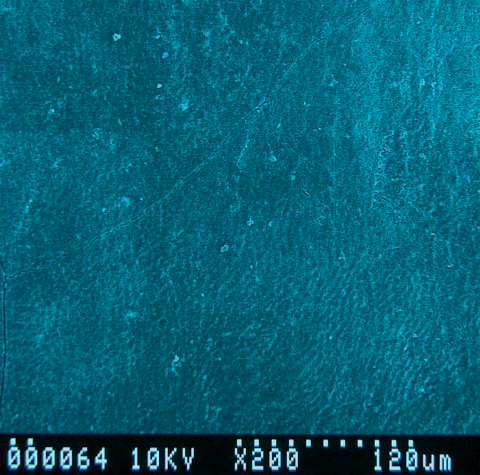
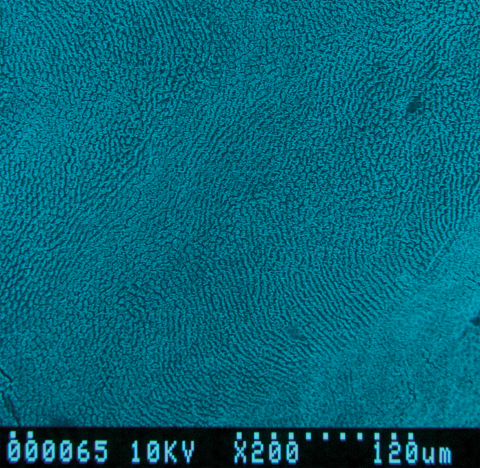
Research by dental hygienist and PhD researcher Claudio Pasquale et al. (2023) shows that prolonged exposure to hydrogen peroxide can cause significant changes in tooth structure, similar to the damage caused by acid etching. These changes include enamel erosion and microcracks, which weaken the tooth’s hardness and flexibility. As a result, the risk of permanent damage and tooth sensitivity increases significantly.
Pasquale et al. (2023) also demonstrated that prolonged exposure could cause hydrogen peroxide to be released from the whitening gel in liquid form, allowing deeper penetration into dried enamel and dentin. This considerably increases the risk of tooth sensitivity and damage. Frequent repetition of treatments using high concentrations of hydrogen peroxide is not recommended, as it can significantly increase the risk of permanent enamel damage.
Light-Activated Whitening Method
While chemically activated whitening has been the traditional choice, light-activated methods have developed considerably in recent years, offering a safer and more effective alternative for teeth whitening.
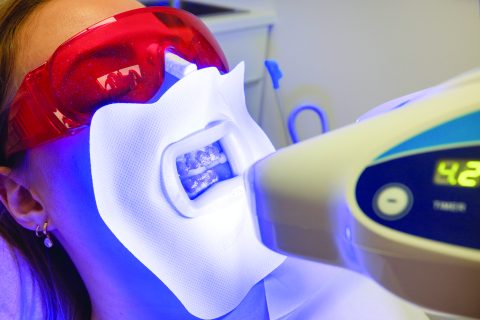
In light-activated whitening, a light source such as LED or laser activates photosensitizers in the whitening agent, which respond to a precisely defined wavelength. Photosensitizers absorb light energy and transfer it to a chemical reaction, initiating the photochemical process.
If a whitening product claims to work with different light wavelengths or to be “enhanced” by any light, it likely contains no photosensitizers capable of absorbing light energy. It is essential to distinguish between dyes and photosensitizers. The color of the whitening agent, whether red, blue, green, or yellow—does not indicate the presence of photosensitizers. A dye does not equate to a photosensitizer.
Photosensitizers require a specific light wavelength to activate, so not just any light can initiate the photochemical reaction. If the light wavelength is incorrect, the photochemical process will not start, and instead, the light will begin to heat the whitening gel. In this case, whitening agents “enhanced” by light rely on a heat reaction rather than a photochemical one.
The Disadvantages of Heat in Whitening
Using a light source with a whitening agent that lacks photosensitizers causes both the whitening agent and teeth to heat up. Heat is particularly harmful because it dehydrates the enamel, making it more porous and prone to weakening. This intensifies tooth sensitivity and can lead to long-term damage.
Studies by Kwon et al. (2009) and Epple et al. (2019) show that heat does not enhance whitening effectiveness. While teeth may temporarily appear whiter due to enamel dehydration, this effect disappears once the teeth regain their natural moisture balance. However, enamel dehydration and the damage caused by heat can be permanent.
Pasquale et al. (2023) confirmed these findings. Their study found that during laser whitening without photosensitizers, the tooth temperature rose by as much as 7 degrees Celsius after just one minute of light exposure. This increase is significant, as the Therapia Odontologica dental handbook states that even a rise of 5 °C can cause serious damage to pulp tissue, potentially leading to necrosis. Additionally, heat can impair the pulp’s defense mechanisms, such as catalase enzyme function, increasing the risk of pulp damage.
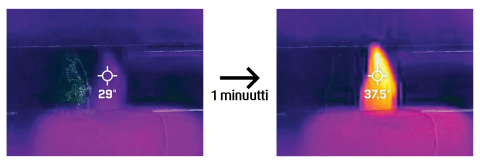
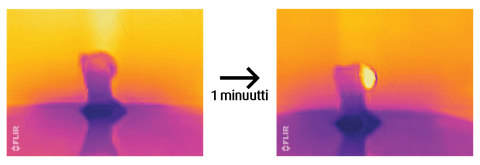
However, when the study used a whitening agent with photosensitizers, these absorbed all the laser light energy and heat, preventing any increase in tooth temperature. This highlights the importance of photosensitizers for safe and effective whitening and shows that heat-based methods without photosensitizers are risky.
Singlet Oxygen – More Efficient and Safer Whitening Option
Dentist-researchers Nikolaos Loupis and Remigio Piergallini have developed and patented a light- activated teeth whitening method where photosensitizer activation produces large amounts of free radicals, along with significant amounts of singlet oxygen. Singlet oxygen is a highly reactive form of oxygen capable of oxidizing organic stains deep in the dentin up to 1,000 times more effectively than the free radicals generated by traditional methods. This significantly enhances whitening effectiveness.
Pasquale et al. (2023) found that the singlet oxygen-releasing method was gentle on enamel, even when using high concentrations of hydrogen peroxide. The method caused only minor and temporary changes in the surface microstructure of the teeth, which quickly returned to normal.
This contrasts sharply with traditional whitening methods, where high concentrations of hydrogen peroxide can cause permanent enamel damage and long-term adverse effects on dental tissue.
Whitening Effectiveness and Longevity
Pasquale et al. (2023) also showed that the photochemical method, which generates significant amounts of free radicals and singlet oxygen, is three times more effective in oxidation than traditional chemically activated methods. Additionally, whitening results last longer, as singlet oxygen oxidizes stains more deeply within the dentin, slowing their return and extending the longevity of whitening.
Loupis and Piergallini’s light-activated method represents a safer and more effective approach to teeth whitening. It enables rapid whitening with short treatment times, without the risk of long-term enamel or pulp tissue damage. While Pasquale et al. (2023) focused on higher hydrogen peroxide concentrations, Loupis and Piergallini’s photochemical method can achieve effective results even at lower concentrations, such as 16% carbamide peroxide. This lower concentration is gentler on the teeth but still effective in safe whitening, making it particularly suitable for patients with sensitive teeth and young adults at higher risk of pulp tissue irritation and enamel damage. Gentle carbamide peroxide-based light-activated whitening can be safely repeated several times a year, making it suitable for long-term use without risking enamel damage.
Conclusion
The choice of teeth whitening method should always be based on researched evidence of its safety and effectiveness. Oral care professionals have the responsibility to ensure that the treatment options they offer patients do not jeopardize oral health but promote it in the long term. The light- activated method developed by Loupis and Piergallini offers significant advantages over traditional whitening methods. It reduces the risk of enamel and pulp tissue damage by avoiding harmful heat exposure and preserving tooth structure integrity. This technology ensures gentle and safe whitening that improves patient satisfaction, while supporting the long-term maintenance of oral health and fostering lasting patient relationships.
References
Epple, M., Meyer, F., & Enax, J. (2019). A Critical Review of Modern Concepts for Teeth Whitening. Dent. J., 7, 79. https://doi.org/10.3390/dj7030079
Kwon, S.-R., Ko, S.-H., & Greenwall, L. (2009). Tooth Whitening in Esthetic Dentistry. Quintessence Publishing Company Limited: Berlin, Germany.
Loupis, N., & Piergallini, R. (2022). Teeth Whitening Compositions and Methods. U.S. Patent Application No. 20220111050. Klox Technologies Inc.
Pasquale, C., De Angelis, N., Barberis, F., Lagazzo, A., Dellacasa, E., Biggio, D., Schiaffino, M., Raiteri, R., Ceseracciu, L., & Benedicenti, S. (2023). Safety and Effectiveness of Conventional Commercial Products for Professional Tooth Bleaching: Comparative Ex Vivo Study Using AFM Microscopy and Nanoindentation. Appl. Sci., 13, 9371. https://doi.org/10.3390/app13169371
Therapia Odontologica (2024). Cariology Teeth Whitening – In-Office Whitening, Article ID: tod13053 (013.053). © Dental Mammoth Oy.
Photo Credits
Image 1: Photographer: Dario Taddeo, BlancOne® Nordic
Image pair 3a and 3b: Pasquale et al. (2023) study
Image pair 2a and 2b: BlancOne, IDS Spa


