





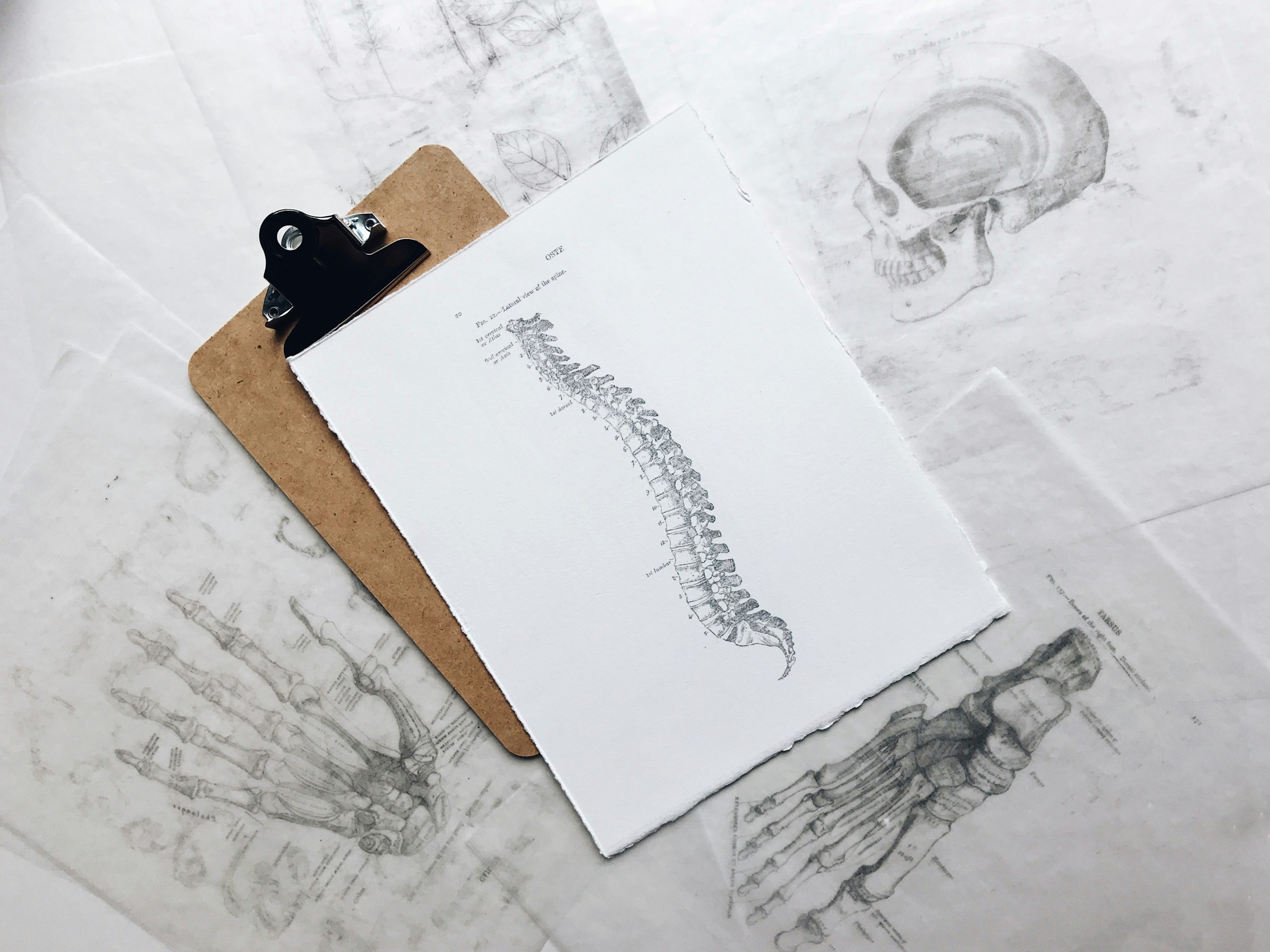
Spondylarthritis is an umbrella term for several types of inflammatory arthritis, in which ankylosing spondylitis (AS) falls. The condition, which literally means “stiffening inflammation of the spine”, is a progressive arthritis that affects joints and organs in the body, from the eyes to the ankles or hips to the heart.[i]
For clinicians, AS is notable for its association with temporomandibular joint disorder (TMD), a debilitating condition that affects mastication, speech and ultimately quality of life, if left untreated. By having a better understanding of AS, clinicians can more accurately identify and support at-risk patients, placing them on the road to recovery.
The spine who loved me
Inflammation of the spine, or other parts of the body, can be seen on an X-ray. Patients would commonly report back pain and stiffness, pain and swelling in other parts of the body, and extreme fatigue as the leading symptoms. However, the development of these symptoms is gradual; some over several months and others over several years – they can also come and go in this time, with patients likely to think that the problem has been solved.[ii] Whilst the condition can improve, it can also get progressively worse, with the risk of patients becoming severely disabled as their spinal bones fuse into a fixed position. This increases the risk of osteoporosis and spinal fractures.[iii]
AS has an elusive aetiology. One source of scientific interest is the gene variant HLA-B27, found in over 80% of patients with AS. Among the general population, prevalence of the gene is estimated at 8%, although most do not have AS. As such, inherited factors can increase the risk of developing AS, making it much harder to prevent, but with the potential to more easily identify at-risk patients whose parents have or had it.[iv]
Furthermore, AS disproportionately affects males, with young men aged 17-35, in particular, being nine times more likely to develop it than their female counterparts. For women, AS symptoms often first appear during pregnancy.[v]
Impacting the jaw
Whilst AS has a very low prevalence, it remains a public health problem for its potential to reduce motor activity and limit daily life. Furthermore, studies have found a high prevalence of the disease in patients with TMD. Whilst assessing and diagnosing the two can be difficult, research suggests an AS prevalence of 59% in TMD patients.[vi] This makes it of particular note to clinicians; supporting patients with AS can better reduce TMD symptoms for optimal care outcomes.
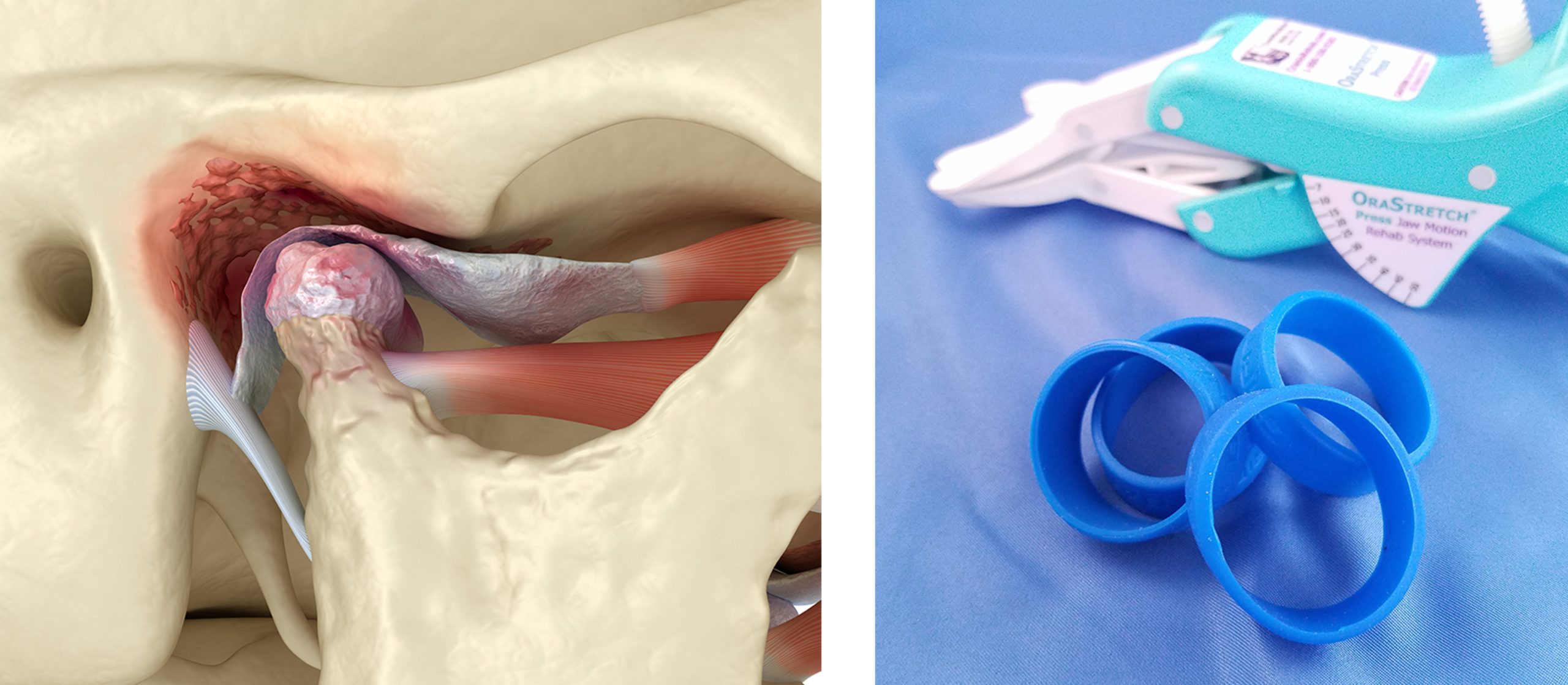
An intra-articular disc is found in the temporomandibular joint (TMJ), separating the joint space and facilitating smoother joint movement. Because of this physical barrier, ankylosis is rare in the TMJ.[vii] However, the wider impact of AS increases the risk of TMD. This ranges from a breakdown of the aforementioned articular surfaces to broader postural changes. Research has already found a strong correlation between poor posture and TMD, with shifts in a patient’s centre of gravity caused by the head moving into an anterior position.[viii] This is exasperated by AS, a well-established cause of chronic back pain that is reported as dull and insidious.[ix] Postural changes then follow, placing extra strain on the axial skeleton.
The prevalence of AS in patients with the most incapacitating TMD subtypes is high. These include myofascial pain with limited mouth opening and degenerative joint diseases like osteoarthritis and osteoarthrosis.[x] Identifying and managing such patients is crucial.
Positive changes
Treating AS can be difficult. Medication can be prescribed to relieve any pain, whilst facet joint injections, epidural injections, acupuncture and physical therapy can further reduce symptoms. To improve posture, cervical pillows can help at night, as well as sleeping on the back, whilst everyday tasks should be completed in an upright, rather than hunched, position.[xi]
As patients with AS are also at an increased risk of developing cardiovascular disease, it is recommended they should stop smoking, lose weight (if they are overweight), take regular exercise and make dietary changes.
A helpful solution
To support patients with TMD, recommend the OraStretch® Press Rehab System from Total TMJ. A user-operated device ideal for home rehabilitation, it stretches the orofacial tissues to restore strength and function to the TMJ. Following the exercises recommended by a healthcare professional can see excellent gains in overall motion immediately after stretching. Reduce TMD-induced pain and swelling with the OraStretch® Press today.
Whilst the prevalence of AS is low, patients affected by it may experience intense pain, physical disability and an overall negative quality of life. By raising awareness of its aetiology and impact on other parts of the body, such as the TMJ, clinicians are better equipped to help those at risk.

For more details about Total TMJ and the products available, please email info@totaltmj.co.uk
Author: Karen Harnott – Total TMJ Operations Director

[i] Umms.org. (2026). Ankylosing Spondylitis. [online] Available at: https://www.umms.org/ummc/health-services/orthopedics/services/spine/patient-guides/ankylosing-spondylitis# [Accessed 6 Jan. 2026].
[ii] NHS (2019). Overview – Ankylosing spondylitis. [online] NHS. Available at: https://www.nhs.uk/conditions/Ankylosing-spondylitis/.
[iii] NHS (2019). Overview – Ankylosing spondylitis. [online] NHS. Available at: https://www.nhs.uk/conditions/Ankylosing-spondylitis/.
[iv] NHS (2018). Ankylosing spondylitis – Causes. [online] nhs.uk. Available at: https://www.nhs.uk/conditions/ankylosing-spondylitis/causes/.
[v] Umms.org. (2026). Ankylosing Spondylitis. [online] Available at: https://www.umms.org/ummc/health-services/orthopedics/services/spine/patient-guides/ankylosing-spondylitis# [Accessed 6 Jan. 2026].
[vi] Rebeca Monteiro Souza, Tavares, E., David Cordeiro Sousa, Marcelo Magalhães Sales, Oliveira, S., Mariano, M., Eliezer Rushansky, Ana and Emanuel Araújo Silva (2021). Prevalence of Temporomandibular Joint Disorders in Patients with Ankylosing Spondylitis: A Cross-Sectional Study. Clinical, Cosmetic and Investigational Dentistry, Volume 13, pp.469–478. doi:https://doi.org/10.2147/ccide.s320537.
[vii] Rebeca Monteiro Souza, Tavares, E., David Cordeiro Sousa, Marcelo Magalhães Sales, Oliveira, S., Mariano, M., Eliezer Rushansky, Ana and Emanuel Araújo Silva (2021). Prevalence of Temporomandibular Joint Disorders in Patients with Ankylosing Spondylitis: A Cross-Sectional Study. Clinical, Cosmetic and Investigational Dentistry, Volume 13, pp.469–478. doi:https://doi.org/10.2147/ccide.s320537.
[viii] Minervini, G., Franco, R., Maria Maddalena Marrapodi, Crimi, S., Almir Badnjević, Cervino, G., Bianchi, A. and Cicciù, M. (2023). Correlation between Temporomandibular Disorders (TMD) and Posture Evaluated trough the Diagnostic Criteria for Temporomandibular Disorders (DC/TMD): A Systematic Review with Meta-Analysis. Journal of Clinical Medicine, 12(7), pp.2652–2652. doi:https://doi.org/10.3390/jcm12072652.
[ix] de Holanda, G.A., de Holanda, T.A., Boscato, N. and Casarin, M. (2022). Temporomandibular joint involvement in individuals with ankylosing spondylitis: A scoping review. Archives of Oral Biology, [online] 146, p.105609. doi:https://doi.org/10.1016/j.archoralbio.2022.105609.
[x] Rebeca Monteiro Souza, Tavares, E., David Cordeiro Sousa, Marcelo Magalhães Sales, Oliveira, S., Mariano, M., Eliezer Rushansky, Ana and Emanuel Araújo Silva (2021). Prevalence of Temporomandibular Joint Disorders in Patients with Ankylosing Spondylitis: A Cross-Sectional Study. Clinical, Cosmetic and Investigational Dentistry, Volume 13, pp.469–478. doi:https://doi.org/10.2147/ccide.s320537.
[xi] Iavarone, K. (2023). What’s the Difference Between Spondylitis and Spondylosis? [online] Healthline. Available at: https://www.healthline.com/health/ankylosing-spondylitis/spondylitis-vs-spondylosis#outlook [Accessed 6 Jan. 2026].


