




Remote working is now a very common practice across various industries. Once a rare benefit for very few, it is now an established part of daily life for many. The COVID-19 pandemic saw particular acceleration, as the average percentage of primarily remote work increased from 5% to a peak of almost 40%, and now levelling at around 22% of individuals working at least one day from home.[i]

The research behind the effects of remote working on mental health and general musculoskeletal health has been explored. However, less frequently discussed is its impact on the stomatognathic system. There is a growing amount of literature supporting the link between persistent changes in posture from working habits and a rise in temporomandibular disorder (TMD).
Postural changes
Working environments that have been adapted for at-home are unlikely to offer the same ergonomic designs that offices and other professional settings do. The prolonged use of laptops on desks that are positioned too low encourages neck strains and postural misalignment. Laptops are the primary tool used in remote work, and with the screen and keyboard being permanently connected, further issues arise through compromised positioning.
Monitors do not necessarily offer a solution, especially when misaligned due to inadequate setups. A height that is too low directly affects jaw positioning and tension, causing the neck to crane, and subsequently compressing muscles.
Furthermore, a study at the University of Cincinnati found that only 58% of individuals working from home have a proper office chair, with 27% using a dining chair, and 15% using a none-chair like a bed or a sofa.[ii] Without proper lumbar support, workers may slouch, causing the jaw to misalign as their head pushes forward and constant, severe pressure is placed on the temporomandibular joints (TMJ).[iii]
Short term, these positions are not particularly problematic. However, if they are sustained for extended periods of time, they add consistent load across muscles.
Posture and the TMJ
It is evidenced that for every inch your head moves forward from its neutral position, the neck must withstand an additional 4.5 kilograms.[iv] As the function of the TMJ is linked to the position of the head and spine, altering neck posture supports a beater mandibular resting position and muscle activity.[v]
Behavioural patterns
As well as the consequences of altered physical positioning, remote working has introduced differences in daily routines. As lifestyles shift into a lack of separation between personal and work environments, patients might suffer longer periods of focus without interruption. Natural breaks become less frequent, with parafunctional activity like concentration clenching leading to intense fatigue and discomfort. For patients presenting with bruxism. dental professionals should encourage methods of reintroducing healthy breaks into long working hours to avoid such issues.
Furthermore, working from home often means less verbal communication throughout the day as isolation levels increase for many. This reduced movement can cause the jaw to clench unconsciously, which, over time can lead to more significant complications. Work-related stress can contribute to intensified levels of muscle tension too which, when combined with other physical changes, can compound to establish an environment where the chances of TMD are much higher.
Early intervention
Patients affected by these changes might not initially present with TMD as such. Rather, like many conditions, the symptoms will build gradually, with patients demonstrating jaw fatigue, tension headaches,[vi] and more, combined with discomfort in the acromial region. Other symptoms can include audible joint sounds, which whilst not always present in the early stages of TMD, are indicative of further problems long-term.[vii]
Dental professionals should discuss good posture and habit adaptations as part of a routine assessment to support better results. Adjustments to working environments such as screen positioning and seating support are a good starting place to reduce strain.
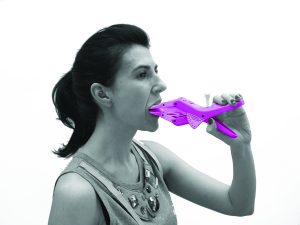
The OraStretch® Press Rehab System from Total TMJ is a must-have device for patients suffering with TMD. Offering a simple and effective way to increase jaw movement, the OraStretch® gently restores function after the consequences of long-term remote working. Innovatively engineered, the product is available in versions specific to children, edentulous patients, over-/under-jet patients, and those with limited oral openings – delivering care to a broad patient base.
The continued support of remote workers
With the continuous rise of remote working, dental professionals have a duty to support patients in avoiding certain health repercussions that stem from it. Delivering appropriate advice and the right tools can make a huge difference to their wellbeing, allowing them to continue working without the pains and hindrances of health concerns.
For more details about Total TMJ and the products available, please email info@totaltmj.co.uk
[i] https://post.parliament.uk/research-briefings/post-pb-0049/
[ii] Davis KG, Kotowski SE, Daniel D, Gerding T, Naylor J, Syck M. The Home Office: Ergonomic Lessons From the “New Normal”. Ergon Des. 2020;28(4):4-10. doi: 10.1177/1064804620937907. PMID: 40963944; PMCID: PMC12439588.
[iii] Fernández-de-las-Peñas C, Alonso-Blanco C, Cuadrado M, Pareja J. Forward Head Posture and Neck Mobility in Chronic Tension-Type Headache: A Blinded, Controlled Study: A Blinded, Controlled Study. Cephalalgia. 2006;26(3):314-319. doi:10.1111/j.1468-2982.2005.01042.x
[iv] Naresh-Babu J, Arun-Kumar V, Raju DGS. Surgeon’s Neck Posture during Spine Surgeries: “The Unrecognised Potential Occupational Hazard”. Indian J Orthop. 2019 Nov-Dec;53(6):758-762. doi: 10.4103/ortho.IJOrtho_677_18. PMID: 31673178; PMCID: PMC6804392.
[v] Olivo, S. A., Bravo, J., Magee, D. J., Thie, N. M., Major, P. W., & Flores-Mir, C. (2006). The association between head and cervical posture and temporomandibular disorders: a systematic review. Journal of orofacial pain, 20(1).
[vi] Wan, J., Lin, J., Tingfeng Zha, Ciruela, F., Jiang, S., Wu, Z., Fang, X., Chen, Q. and Chen, X. (2025). Temporomandibular disorders and mental health: shared etiologies and treatment approaches. The Journal of Headache and Pain, 26(1). doi:https://doi.org/10.1186/s10194-025-01985-6.
[vii] Mehndiratta A, Kumar J, Manchanda A, Singh I, Mohanty S, Seth N, Gautam R. Painful clicking jaw: a pictorial review of internal derangement of the temporomandibular joint. Pol J Radiol. 2019 Dec 23;84:e598-e615. doi: 10.5114/pjr.2019.92287. PMID: 32082459; PMCID: PMC7016362.


