

For maintaining oral health, at every age, it is essential to minimise sugar in the diet and ensure oral hygiene is at a good standard. As clinicians it’s important to offer parents and carers advice regarding their children’s oral health as early as possible. The NHS guidelines recommend that one-year-olds should have a maximum of 10g of sugar per day, with two- and three-year-olds having no more than 14g per day. Sugars should not be added to food or drinks given to babies under the age of one. This applies to naturally occurring sugars and added sugars.[i]
Sometimes, it may be difficult for parents and carers to understand which foods are appropriate for their children, as some foods which appear to be healthy options may actually contain high levels of sugar. Therefore, educating those with young children about the risks of sugar for oral health at any age, and the value of looking after primary teeth, is very important.
Organic foods or sugary snacks?
A recent report from The Food Foundation, which aimed to examine the diet and health of UK children aged one to five, brought to light concerns about the ways baby and toddler snacks were promoted. The research was carried out by Action on Salt and Sugar at Queen Mary University of London, and found that across the packaging of 113 snacks, many claimed to be natural or healthy (28% of claims), and others highlighted the presence or absence of certain ingredients (21%). However, 20% of the products contained high amounts of sugars and 50% contained medium levels of sugar.[ii]
These types of foods and snacks are widely consumed by young children, with parents assuming that they were created based on the dietary needs of babies and toddlers. However, in reality, products that claim to be ‘one of a child’s five a day’ or ‘organic’ and contain ‘no junk’ may actually contain the equivalent of three sugar cubes per serving. This quantity of sugar may put children’s oral health at risk.[iii]
Baby’s first check up
In order to monitor children’s oral health, and establish a good relationship with young patients as they grow up, it is very important that they are brought to the dentist when they are young. The NHS recommends either taking a child to the dentist when their primary teeth first emerge, or before they are one year old. Doing this helps children to become familiar with the dental environment, and get to know their dentist – even if the child simply opens their mouth so that the practitioner can have a look, it’s good practice.[iv]
At this time, it is a good opportunity to highlight the importance of a healthy diet, and what that looks like for very young children. This might mean advising against sugary snacks, and instead recommending more non-sweet vegetables like broccoli, cauliflower, and spinach.[v]
Getting used to toothbrushing
 Similarly, recommending that parents start to brush their child’s teeth as soon as their first primary tooth comes through helps them to get used to the process. It’s important that the right technique is used to clean the teeth – which it can be helpful to demonstrate to parents – and that the teeth are cleaned twice per day (morning and night). All of the appropriate advice should be given to parents and carers to ensure their child is receiving the best possible care.[vi]
The NHS recommends using a toothpaste with the appropriate fluoride level for a child’s age, ensuring they get effective protection against cavities. While this guidance is well-known, parents benefit from understanding how the way fluoride is delivered can make a real difference for long-term dental health.[vii]
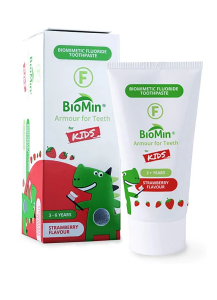
BioMin® F for Kids is suitable for children aged three and up. Although it contains a lower fluoride level (530ppm) than typical guidelines (1350ppm-1550ppm), its innovative bioactive formulation and unique technology gradually releases fluoride and essential minerals over 10–12 hours. This provides ongoing protection, helping to safeguard little teeth from the frequent acid attacks caused by sugary snacks, fruity drinks and meal-times, long after brushing is finished. The lower fluoride content also means there is a reduced risk of accidental ingestion, offering peace of mind for parents while maintaining effective cavity prevention. And with its naturally appealing strawberry flavour, it makes daily brushing a treat rather than a chore.
In order to help parents and carers navigate the challenges of managing their child’s dental health, be sure to offer the most appropriate advice when it comes to sugar consumption, dental visits, and toothbrushing to minimise their risks of dental problems, and give them the best start in life.
Author: Alec Hilton | CEO | BioMin Technologies


The science is clear. The solution is simple.
www.biomin.co.uk
Back in Stock Soon!
We are currently experiencing a temporary supply disruption for BioMin® F and BioMin® C across many of our usual stockists due to regulatory processes. This short pause allows us to maintain the highest standards of safety and quality for our products. In the meantime, BioMin® F for Kids remains widely available across stockists in the UK and EU, as well as online via Amazon, so you can continue your child’s dental care routine without interruption.
We’re working hard behind the scenes to resolve this and will be sharing updates on our website as soon as we have a clearer timeline.
Your patience and continued support is truly appreciated.
[i] NHS. Sugar: the facts. Accessed: October 25. https://www.nhs.uk/live-well/eat-well/food-types/how-does-sugar-in-our-diet-affect-our-health/
[ii] The food foundation. Marketing of baby and toddler snacks out of control with average of 20 claims per product. Accessed: October 25. https://foodfoundation.org.uk/press-release/marketing-baby-and-toddler-snacks-out-control-average-20-claims-product
[iii] The food foundation. Marketing of baby and toddler snacks out of control with average of 20 claims per product. Accessed: October 25. https://foodfoundation.org.uk/press-release/marketing-baby-and-toddler-snacks-out-control-average-20-claims-product
[iv] NHS. Children’s teeth. Accessed: October 25. https://www.nhs.uk/live-well/healthy-teeth-and-gums/taking-care-of-childrens-teeth
[v] The Guardian. Baby food firms given 18 months to improve quality of products in England. Accessed October 25. https://www.theguardian.com/society/2025/aug/22/baby-food-firms-18-months-improve-quality-products-england
[vi] NHS. Children’s teeth. Accessed: October 25. https://www.nhs.uk/live-well/healthy-teeth-and-gums/taking-care-of-childrens-teeth
[vii] NHS. Children’s teeth. Accessed: October 25. https://www.nhs.uk/live-well/healthy-teeth-and-gums/taking-care-of-childrens-teeth


