




It may seem as though everybody who stops flossing daily does so because they forget, or because it feels inconvenient or time-consuming, but there is another reason that is often overlooked. Studies show that roughly 16% of people who do not floss daily cite oral pain or discomfort as their primary reason for avoiding it.[i] In the absence of clear guidance from an expert, stopping the uncomfortable activity seems like the sensible choice. This can be one of the more frustrating patterns to unpick for clinicians, as the reality often is that interdental hygiene is far more important in times like these – not less.
Understanding what drives their decision, and how to counsel patients through it, is a more useful conversation than simply restating the importance of flossing. Patients already know they should floss. What they need is a reason to keep doing it when it hurts, as well as, ideally, a way to do it every day that does not make the pain worse.
Gingival inflammation and a self-reinforcing cycle
The most common reason patients report pain or discomfort during flossing is gingival inflammation. Inflamed tissue bleeds more readily, is more sensitive to contact, and is perceived as confirmation that flossing is causing harm rather than addressing it. The reality is the inverse: inflamed gingivae bleed on flossing precisely because interdental plaque has been allowed to accumulate, and the solution is more consistent cleaning, not less.
This is a cycle that is well understood in the literature. Early gingivitis caused by plaque accumulation leads to tissue sensitivity, which discourages the interdental cleaning, which allows further plaque accumulation, which worsens the inflammatory state.[ii] Breaking the cycle requires patients to floss through an initial period of discomfort with the knowledge that, within one to two weeks of consistent cleaning, bleeding and sensitivity typically reduce significantly.[iii]
The challenge is communicating this in a sensitive and empathetic enough way that the patient does not feel ignored or dismissed.
Mouth ulcers and soft tissue lesions
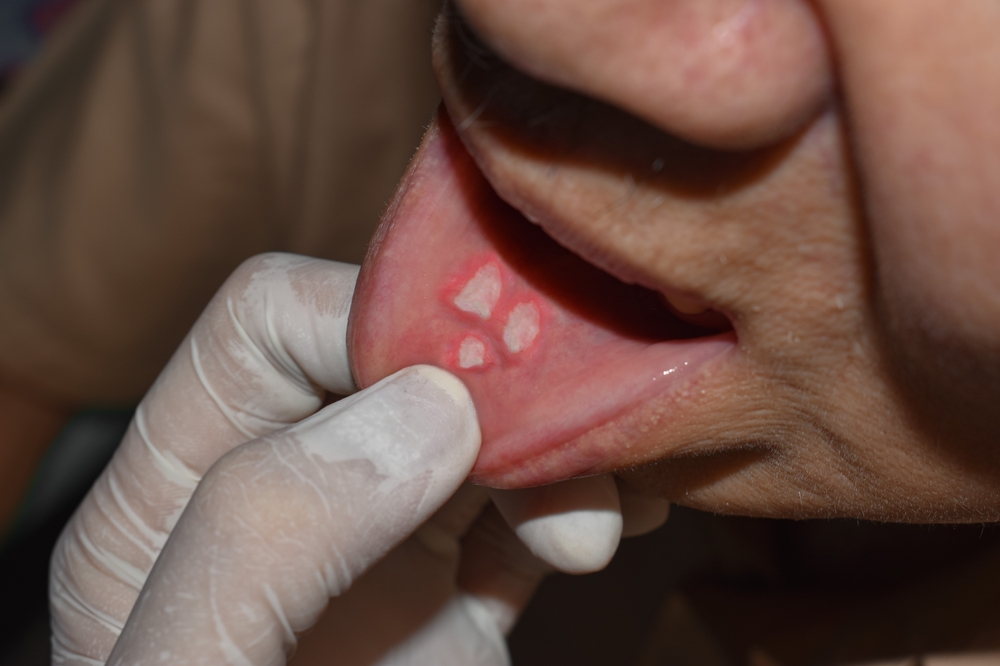
Aphthous ulcers present a different but related challenge. For patients experiencing a minor aphthous episode, particularly on the labial or buccal mucosa near interproximal spaces, flossing can make direct contact with the lesion that is painful enough to stop the routine entirely. As aphthous ulcers typically resolve within 1–2 weeks,[iv] this can mean a full fortnight of disrupted interdental hygiene at a time when the patient may already be immunologically stressed.
Counselling, for these patients, centres around two things: reassurance that gentle cleaning will not delay healing, and practical strategies to minimise trauma to the tissue. Treating the affected site with special care will allow the continuation of the habit without exacerbating the lesion.
Post-surgical and post-procedural sensitivity
Patients recovering from periodontal treatment, extraction, or other soft tissue procedures often receive guidance on avoiding the surgical site during healing. This is necessary; the risk, however, is overgeneralisation. Patients who are told to be careful during their oral hygiene routine may interpret this as a reason to avoid or lessen the frequency of all cleaning. Explicit, specific guidance, identifying which teeth and which spaces should be cleaned as normal, could help to prevent a localised restriction from becoming a whole-mouth lapse.
Orthodontic treatment and sensitivity
Patients in active orthodontic treatment represent another cohort at particular risk of interdental hygiene disruption. The combination of brackets and wires, increased plaque retention, and – particularly in the early stages of treatment or following adjustments – generalised dental sensitivity makes flossing feel like a significant effort. For many patients, it becomes one of the first habits to slip.
This is important not only for periodontal health but for the risk of decalcification and early carious lesion development near brackets.[v] The topic of tool selection is particularly relevant here: a device that eliminates the need to thread floss behind archwires, that can be operated with one hand, and that offers a sensitive mode for use during periods of post-adjustment discomfort, substantially lowers the barrier to consistent cleaning.
The importance of tool selection
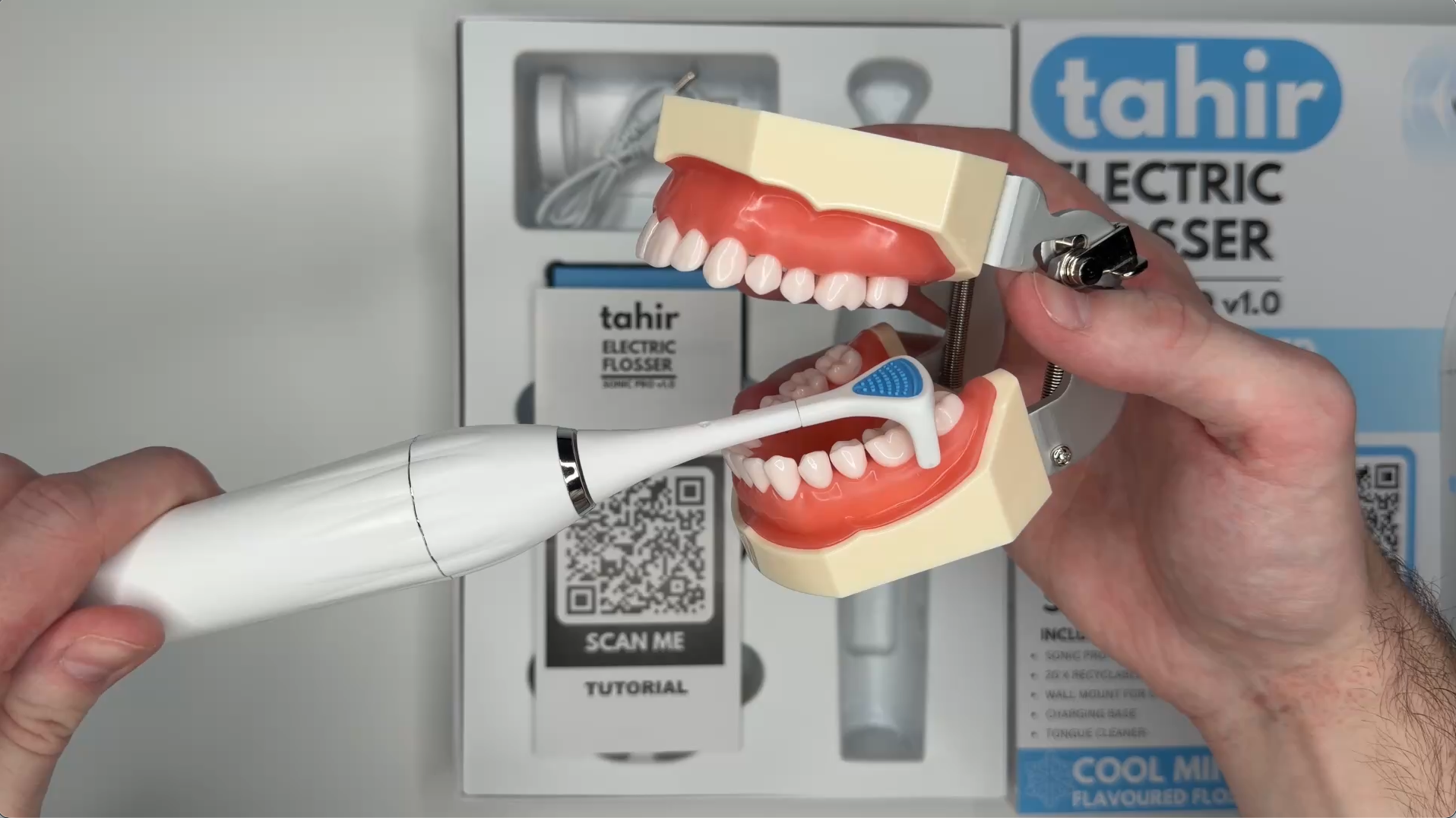 Across all of these scenarios, the evidence points to a consistent theme: patients are more likely to maintain interdental hygiene through episodes of discomfort when the cleaning process itself is perceived as gentle, controllable, and low-effort.[vi] Tool selection is vital here – a device with multiple cleaning modes, including a sensitive setting, and that doesn’t require dextrous manoeuvring, removes several of the barriers that typically cause patients to abandon the habit.
The Tahir Electric Flosser is a one-handed, rechargeable electric flosser with four cleaning modes – including a Sensitive setting designed for patients with gingival or soft tissue tenderness. For clinicians looking to support patient compliance through the episodes that most commonly interrupt it, this is a practical recommendation backed by evidence.
The patients who lapse are not necessarily the ones who don’t care about their oral health – they may be experiencing more than the average discomfort, or have otherwise hit a barrier without the correct tools to address it. To identify the potential for moments like these, and respond to them rapidly, is what makes a truly exceptional practitioner.

The Tahir Electric Flosser is available for patients at tahiroralcare.com and through Oraldent, Amazon, and Harrods. For practice enquiries and professional ordering, visit tahiroralcare.com
Author: Stefan White – Founder & Managing Director Tahir Oral Care

[i] Clark J. Research Findings Eight in Ten Americans Have Used Something Other than String Floss, a Water Flosser, an Interdental Brush or a Toothpick to Remove Something Stuck in Their Teeth Nearly Two Thirds Admit They Have Done This despite Knowing They Should Be Using Proper Dental Products. https://www.ipsos.com/sites/default/files/ct/news/documents/2017-10/National-Dental-Hygiene-Survey-PR-2017-10-18-v1.pdf
[ii] Institute for Quality and Efficiency in Health Care. Gingivitis and periodontitis: Overview. Nih.gov. Published August 23, 2023. https://www.ncbi.nlm.nih.gov/books/NBK279593/
[iii] Harvard Dental. Published September 3, 2025. Accessed May 12, 2026. https://harvarddentaltulsa.com/blog/gums-bleed-when-i-floss/
[iv] NHS. Mouth ulcers. NHS. Published 2019. https://www.nhs.uk/conditions/mouth-ulcers/
[v] Vernon LT, Seacat JD. In Defense of Flossing: Can We Agree It’s Premature to Claim Flossing is Ineffective to Prevent Dental Caries?. J Evid Based Dent Pract. 2017;17(2):71-75. doi:10.1016/j.jebdp.2017.03.008
[vi] Thomassen TMJA, Slot DE, Graetz C, et al. The Patient-Centred Interdental Cleaning Concept-Consensus Based on a Round Table. Int J Dent Hyg. 2026;24(2):247-264. doi:10.1111/idh.70009


